

The golden path
The full product path has six parts: compose, sign, hand to the Clerk, intake approval, Bookkeeper draft, and posting approval. This current-branch walkthrough reached and records the first two. It stops rather than filling the remaining four parts with older captures or an invented demo state. Typewriter to posted journal entry traces all six parts in source and states separately what was not verified in the deployed product.1 · Choose the document
The Typewriter exposes its schema registry directly. For this walk, the user chose a supplier VAT invoice from the complete registry.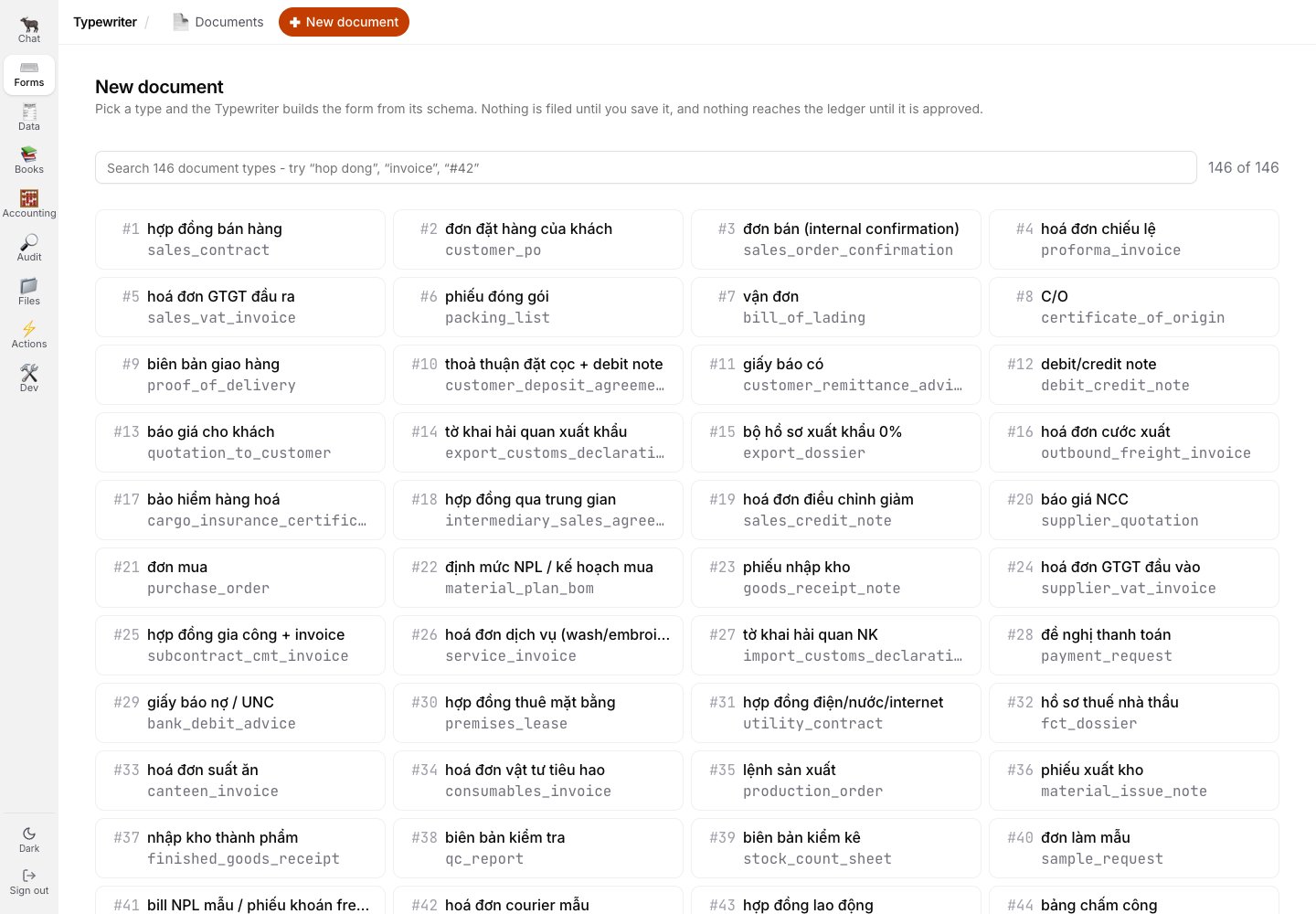
Start with a document type that the renderer and form both know.
2 · Compose against the live document
The form and the document move together. The walked invoice uses synthetic demo values and one line item; the preview is the document the next person will inspect.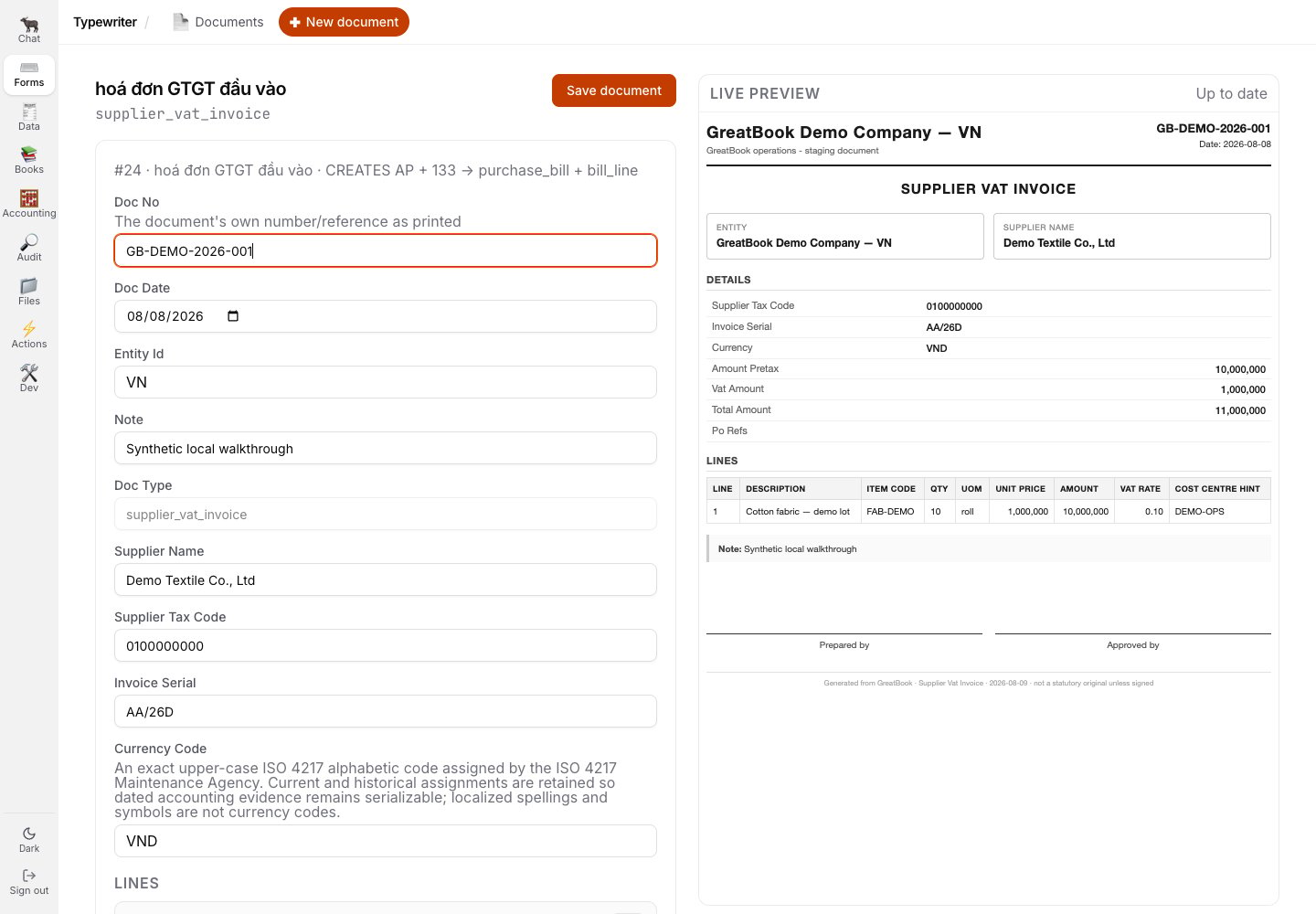
A completed supplier VAT invoice and its live rendered preview, before save.
3 · Save, then stop the maker at approval
Saving creates the document detail with the rendered PDF, the approval trail, handoff state, and stored values together. The author sees the rule immediately: another designated approver has to sign.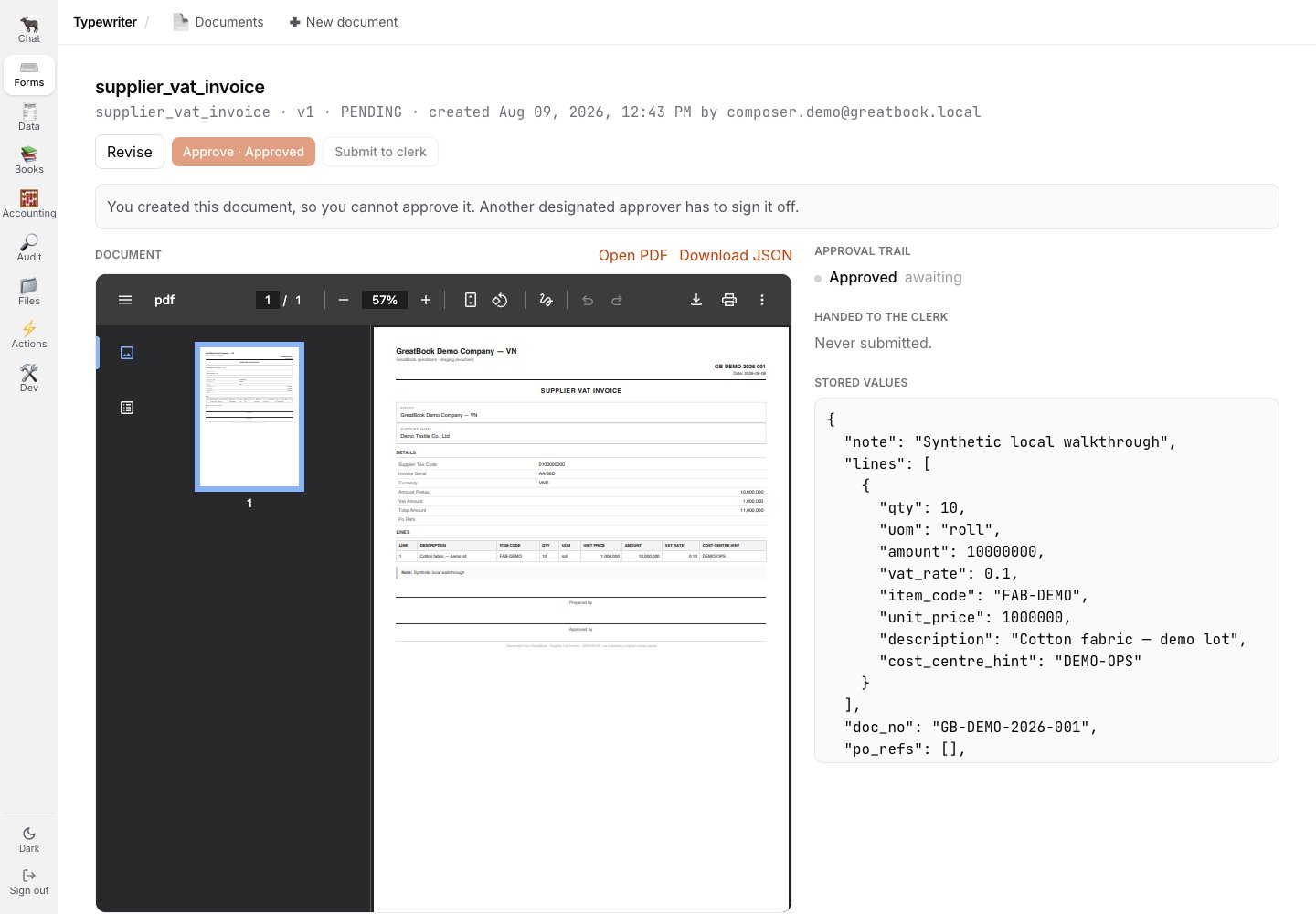
The author can inspect the saved record, but cannot approve the document they made.
4 · A separate approver inspects the same document
The designated approver sees the same PDF and stored values with the approval action available.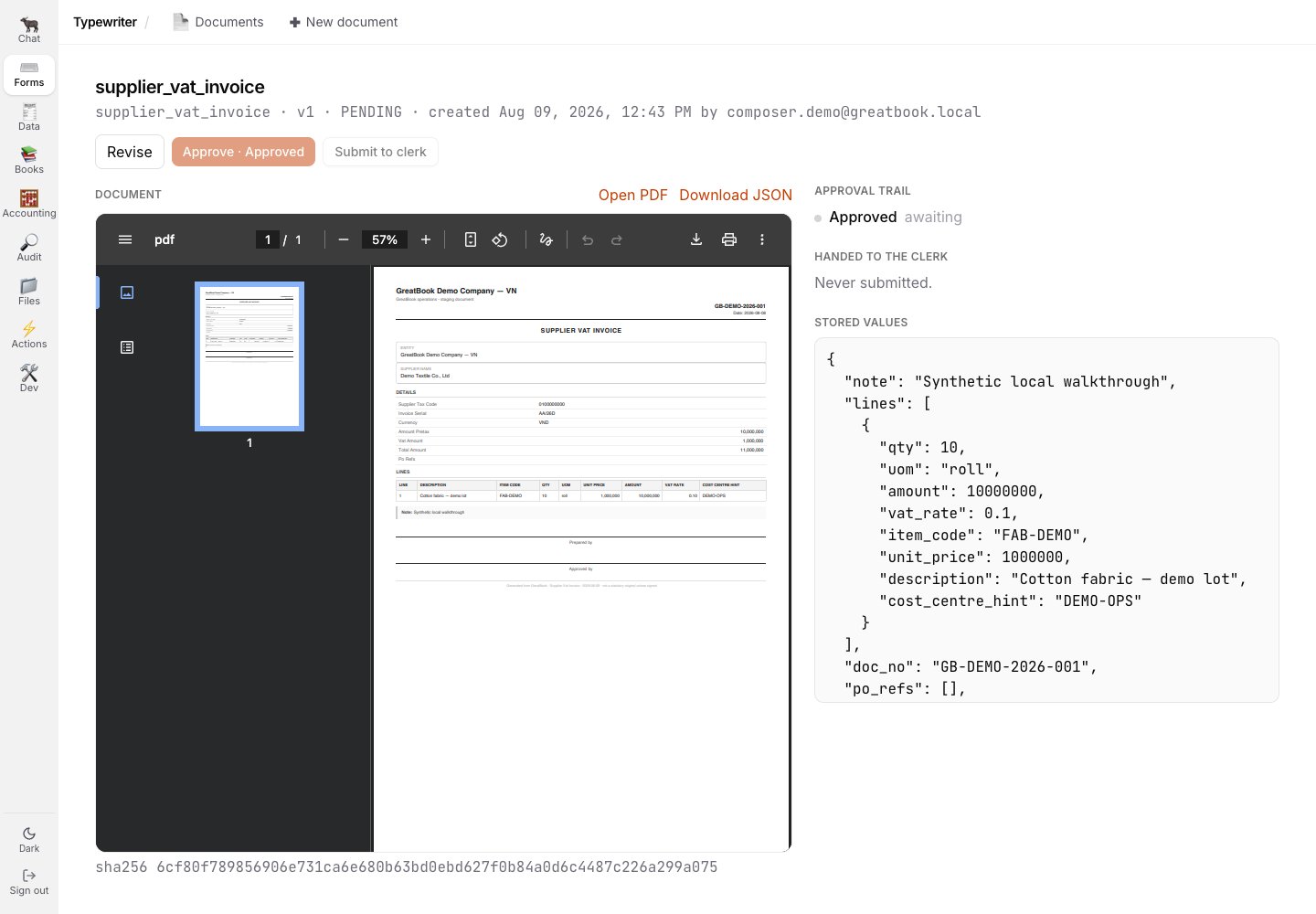
The approver-ready view before signing.
5 · Approval is visible before handoff
Back in Documents, the row is Approved and the handoff remains a separate next action. That boundary is visible without implying that the document is already in review or in the ledger.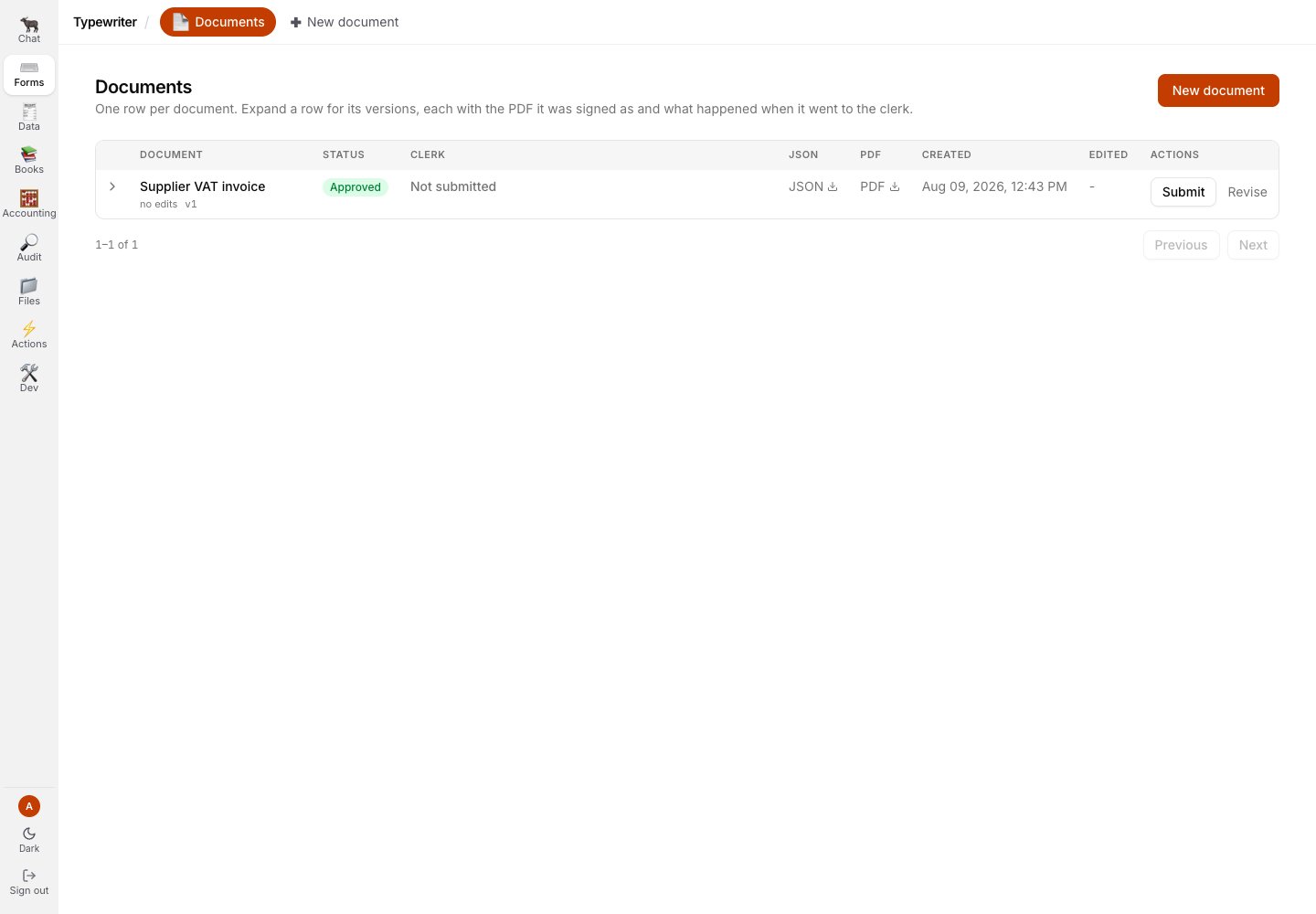
Approved is not submitted: the Documents row keeps those states and actions separate.
Related
- 1 · Compose the document
- 2 · Sign it
- Refusals and revisions
- The product, screen by screen
- Typewriter to posted journal entry - the source-traced technical path beyond the visual evidence